
the honest version of the tradeoff
The appeal, in athlete narratives, is a single-session experience that appears to blunt opioid withdrawal and lift mood quickly enough to make room for real psychotherapy. That's the case people make for it.
The case against it, stated plainly: ibogaine blocks the cardiac hERG channel, which prolongs the QT interval and can trigger torsades de pointes — a lethal arrhythmia. Published case series document deaths, disproportionately at clinics without continuous cardiac monitoring. This isn't a theoretical risk footnote; it is the central reason ibogaine remains tightly restricted and why any serious plan starts with cardiology, not logistics.
Mechanistically, ibogaine is converted by CYP2D6 into noribogaine, which has a much longer half-life and appears to be responsible for the sustained mood and craving effects some people report after the acute experience passes.
In athletes specifically, weight cutting and dehydration compound cardiac risk by depleting the electrolytes that protect against arrhythmia — a combination that doesn't come up in general-population discussions of ibogaine but matters enormously here.
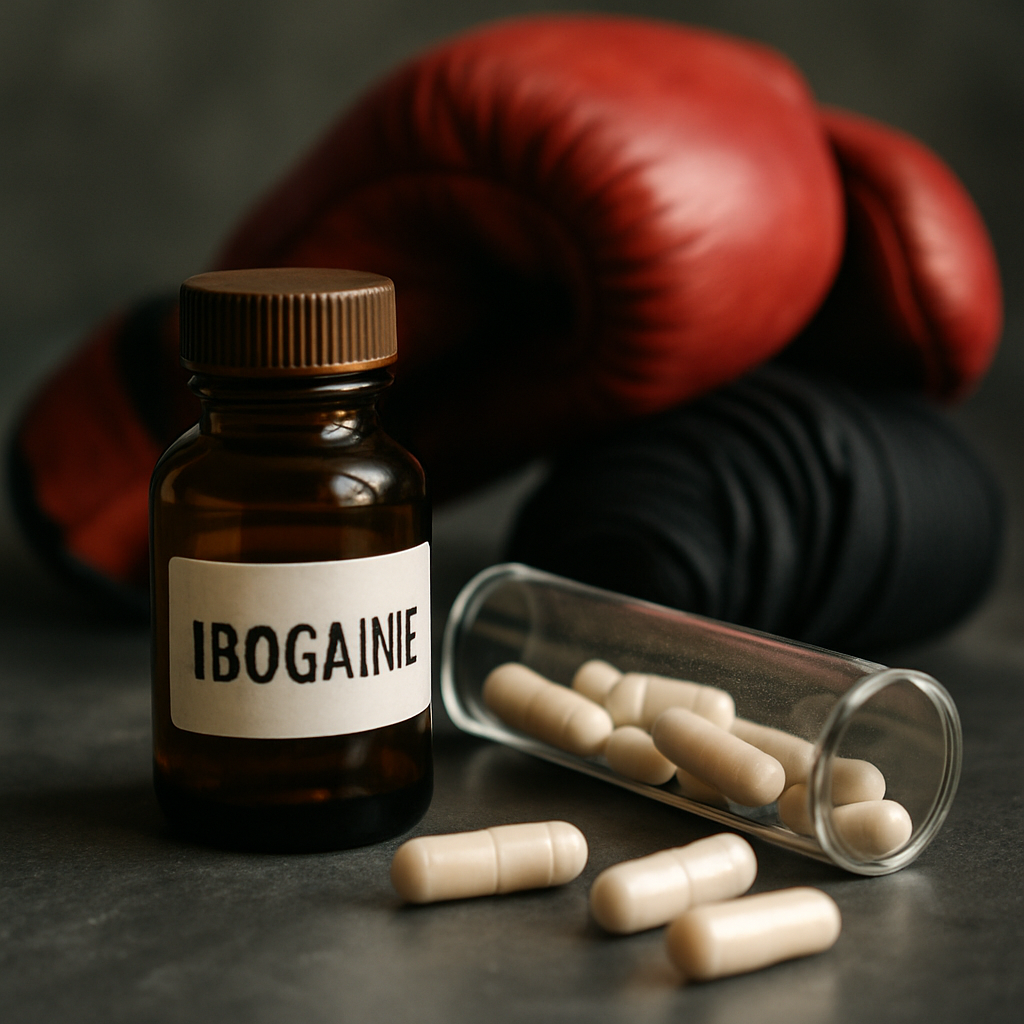
What the evidence actually supports
- Small observational studies and case reports describe reduced opioid withdrawal and cravings — not a controlled trial base.
- Serious QT prolongation and arrhythmia are documented, well-characterized risks, not rare edge cases dismissed by experienced clinicians.
- Acute ataxia compromises balance and reaction time for at least 24–72 hours; there is no scenario where sparring during this window is acceptable.
what's covered here
This overview is deliberately short. The substance of this topic — the cardiac screening protocols, the legal exposure, the clinic vetting questions — lives on the pages below.
01
Addiction & pain management
What the evidence says about withdrawal and craving reduction, and how it compares to buprenorphine and methadone.
02
Concussion & CTE
Why "neuroprotection" claims are preclinical hypotheses, not established human outcomes.
03
Legal & anti-doping status
Schedule I in the US, S0-banned under WADA, and what that means for eligibility.
04
Screening & monitoring
The cardiac workup and contraindications that determine whether this should happen at all.
05
Choosing a clinic
The vetting questions that separate a monitored facility from a dangerous one.
06
FAQ & research gaps
Direct answers, plus an honest look at what's still unknown.